
"Japanese coffee method"
4000 article(s) found

Hand coffee brewing skills | what are American hand brewing and Japanese hand brewing? Differences in coffee-making skills with different hands
Professional coffee knowledge exchange more coffee bean information please follow the coffee workshop (Wechat official account cafe_style) have you tried the coffee made in American pot? You will find that with the same coffee bean, the American pot will be a little more bitter and astringent than the coffee made by hand. The key is that the high water temperature of the American pot causes this phenomenon. The average American pot is actually sprayed through atmospheric pressure.

Kalita Japanese kalita handmade copper pot fine mouth pot coffee hand pot 600ml coffee brew pot
Japanese authentic KALITA 600ml copper pot [origin]: Japan [material]: copper [capacity]: 600ml [weight]: 465g [bottom diameter]: 85mm [box size]: W175 x D100 x H160 mm Kalita classic copper kettle maximum capacity 600ml, recommended capacity 400ml, because of its small capacity, it is more suitable for use with 1x 2-person filter cups. Adoption of grade fineness

The history of flannel? Why do Japanese like to use flannel filter cups to extract coffee?
Professional coffee knowledge exchange more coffee bean information please follow the coffee workshop (Wechat official account cafe_style) Qianjie Coffee brief introduction of the origin of flannel filter cloth. It is said that the coffee brewed by flannel filter shows the maximum flavor of coffee. After a taste, you can feel the strong flavor spread all over the body from the tip of the tongue, the aroma of coffee floats in the throat, and the taste is gradually in the beautiful chemistry.

Sumatra Roasted Coffee Bean Flavor Description Taste Grind Scale Variety Manor Introduction
During the Japanese occupation of Indonesia in World War II, a Japanese soldier drank a very good coffee in a cafe, so he asked the owner, the name of the coffee, the owner mistakenly thought he was asking where you are from, so he answered: Mandenin. After the war, Japanese soldiers recalled drinking mantenin in Indonesia. And so the stamp

The brewing of hand-brewed coffee is a favorite extraction method of the Japanese.
Hand-brewed coffee is a favorite extraction method in Japan. Hand-brewed coffee is a method invented by a German, and now coffee pot filter paper is sold everywhere in supermarkets, which is the brand founded by the German at that time. To put it simply, the method of hand-brewing coffee is to grind the coffee and put it in a funnel and pour hot water on it.
. Kalita bronze lamp 0.9L Japanese coffee utensils
Advantages: 1) the fine water is soft and very stable; 2) the spout is raised very high to increase the impact of the effluent, and at the same time, the kettle can be very close to the filter cup without scraping the filter paper; 3) it looks very good (in my opinion). Disadvantages: 1) the heat preservation is so bad that the boiling water can be poured into the kettle and then poured into the boiling water. At a glance, it is only less than 80 degrees.

The skill of making coffee by hand | what is the difference between American hand brewing and Japanese hand brewing? Suitable for making coffee by hand
Professional coffee knowledge exchange more coffee bean information please follow the coffee workshop (Wechat official account cafe_style) have you tried the coffee made in American pot? You will find that the same coffee bean, the American pot compared with the hand-made coffee, will be a little more bitter and astringent, the key is that the high water temperature of the American pot leads to this phenomenon, the general American pot actually through the atmospheric pressure.

Introduction to the Flavor of Indonesian Mamassa Coffee what is the effect of low water temperature on the flavor of Japanese brewing methods
Professional barista communication Please follow the coffee workshop (official Wechat account cafe_style) when it comes to Sulawesi Coffee, Toraya Coffee may have a strong impression. But this time we will introduce coffee in Mamasa County, west of Tanatolaya. Sulawesi Massa is this kind of coffee. This baking: medium and deep baking treatment: wet planing fragrance (the smell of raw beans)

A brief introduction to the treatment method of grinding degree and baking degree of fine coffee beans in Lindong coffee producing area of Sumatra
Most Indonesian coffee is known as Mantenin, but in fact, the much-loved Sumatran coffee in the boutique coffee industry, in addition to Mantenin in Jiangsu Province, there is also Arabica coffee produced in Aceh Province, and our bean search is focused on a very special bean, which is a Jember coffee carefully cultivated by the Gayo aborigines of Lake Tawa in Aceh Province, Gayo Mountains on the banks of Lake Tawa.

Matsuya method extracts delicious ingredients from coffee Japanese hand-made brown liquid arrives at the coffee pot
Boutique coffee is fresh coffee. Whether it's food or drink, of course, the fresh the better, and so is boutique coffee. High-quality coffee should keep the coffee beans fresh before making, including the preservation of baked beans, and grind the coffee beans into powder before making, which is also to retain its original and best flavor. And the way of making hand-made coffee is such a way to make high-quality coffee.

Volcano brewing technique Japanese brewing method Single coffee Boutique black coffee
Fine coffee is fresh coffee. Whether it's food or drink, the fresher the better, and so is specialty coffee. Coffee beans should be kept fresh before making fine coffee, including the preservation of roasted beans, and the coffee beans should be ground before making, which is also to retain its most original and best flavor. And hand brewed coffee making is such a way to make fine coffee

Fine Coffee Culture the History of Coffee and Tea in Japan
Compared with coffee, Japanese tea culture is more traditional and far-reaching, so if we want to mention coffee, let's first learn about Japanese tea culture. Tea has a very long history and origin in Japan. Japanese tea was introduced from China in the 8th-9th century because of the exchange of Buddhism. At the same time, people also brought tea seeds into Japan. By the 12th century, it had been opened in Japan.

Flavor description of Kenyan Coffee Bean by hand method introduction to Manor Grinding scale in producing area
Kenyan coffee American style: large current, strong water column, impact stir-fried coffee powder, with the help of stirring bar disturbance, grinding powder is fine, water temperature is high, hand flushing time is shorter Japanese style: small water flow, drip, gentle touch and kneading coffee powder, grinding powder is too thick, water temperature is low, hand flushing time is longer, bald du comment, American style is like a robber, rudely extract the essence of coffee powder. Japanese style is like the East.
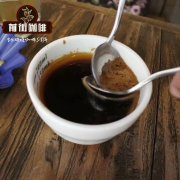
Coffee cup testing standard and process | Japanese SCAJ coffee cup testing process and scoring focus
The "cup test" can stably control the flavor test record of each cup of coffee, which is closer to the "professional" practice. The goal of taste control is to feel good for yourself. Match the preferences of the target customers in the store? Or is it to focus on popular taste? In fact, you just have to decide the direction of the taste according to your own ideas, and try to get close to that taste. Determining the taste.

Steps of making Coffee with siphon Pot introduction to gouache proportion tutorial
The difference between Japanese coffee and espresso first lies in the machine and method of making coffee. Espresso is espresso "pressed" with high temperature hot water, while Japanese brewed coffee; is "brewed" by hand, drip, siphon and so on. From the point of view of practice, the former can be described as happy, and later.
What are the utensils used in Japanese style Matsuya style cooking? What does the loose house style have to say on the appliances?
Professional coffee knowledge exchange more coffee bean information please pay attention to coffee workshop (Wechat official account cafe_style) front street coffee brief description of pine house hand flushing method the main skill of choosing filter cup ~ pine house hand flushing method is to use coarse ground coffee powder, through stewing for a long time, when brewing, thin water is flushed out at 30CM high above the filter cup, and finally hot water is needed, which tastes abrupt.

Matsuya-style hand-brewing coffee skills Akita-style low-temperature hand-flushing Japanese-style hand flushing
Loose house style hand brewing coffee technique: use coarse ground coffee powder, stew for a long time, when brewing, 30CM is higher than the fine water column above the filter cup, and finally add hot water, this method is more prominent, which is a way to lead to the unique taste of coffee beans. Akita hand coffee brewing technique: between 68 and 78 degrees, the essence of coffee can be extracted through the natural tension of water, which can maintain the coffee liquid.

Japanese Kalita coffee brand; copper spoon coffee beans measuring spoon single product specialty coffee spoon
Copper maintenance to keep clean and dry is the basis of copper maintenance, copper dark phenomenon is very common, because copper in the air for a long time will rust. Copper will be oxidized into black copper oxide in humid air, and the copper oxide on the surface of copper will continue to react with carbon dioxide in the air to generate a layer of green basic copper carbonate. Copper also reacts with hydrogen sulfide in the air.

Japanese coffee "full-bodied and mellow"-charcoal roasted coffee
Charcoal roasted coffee is a Japanese coffee, refers to a taste, almost no acid, strong scorched bitterness and glycol, the taste is relatively strong. Authentic charcoal-roasted coffee is generally deeply roasted with carbon fire (gas, carbon fire and infrared), the color is dark, the taste is fragrant and mellow, the taste does not feel sour, if condensed milk has a flavor. Flavor: special aroma, sweet, mellow,
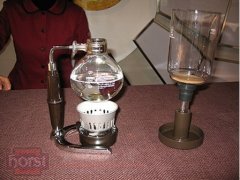
Siphon pot Japanese coffee utensils what is the siphon principle of siphon pot
Introduction: siphon pot (Syphon), commonly known as "glass ball" or "siphon", is a simple and easy-to-use coffee brewing method, and it is also one of the most popular coffee brewing methods in cafes. Although the siphon pot has the nickname of "plug wind type", it has nothing to do with the siphon principle, but uses water heating to produce water vapor, resulting in the principle of thermal expansion and cold contraction, pushing the hot water from the lower sphere to the upper pot, waiting for the next pot.